Expected to Use It, Rationed When You Do
Workday's AI@Work data: half of AI users hit usage limits last month, and 42% hid their AI use. What leaders should fix in their 2027 plans.

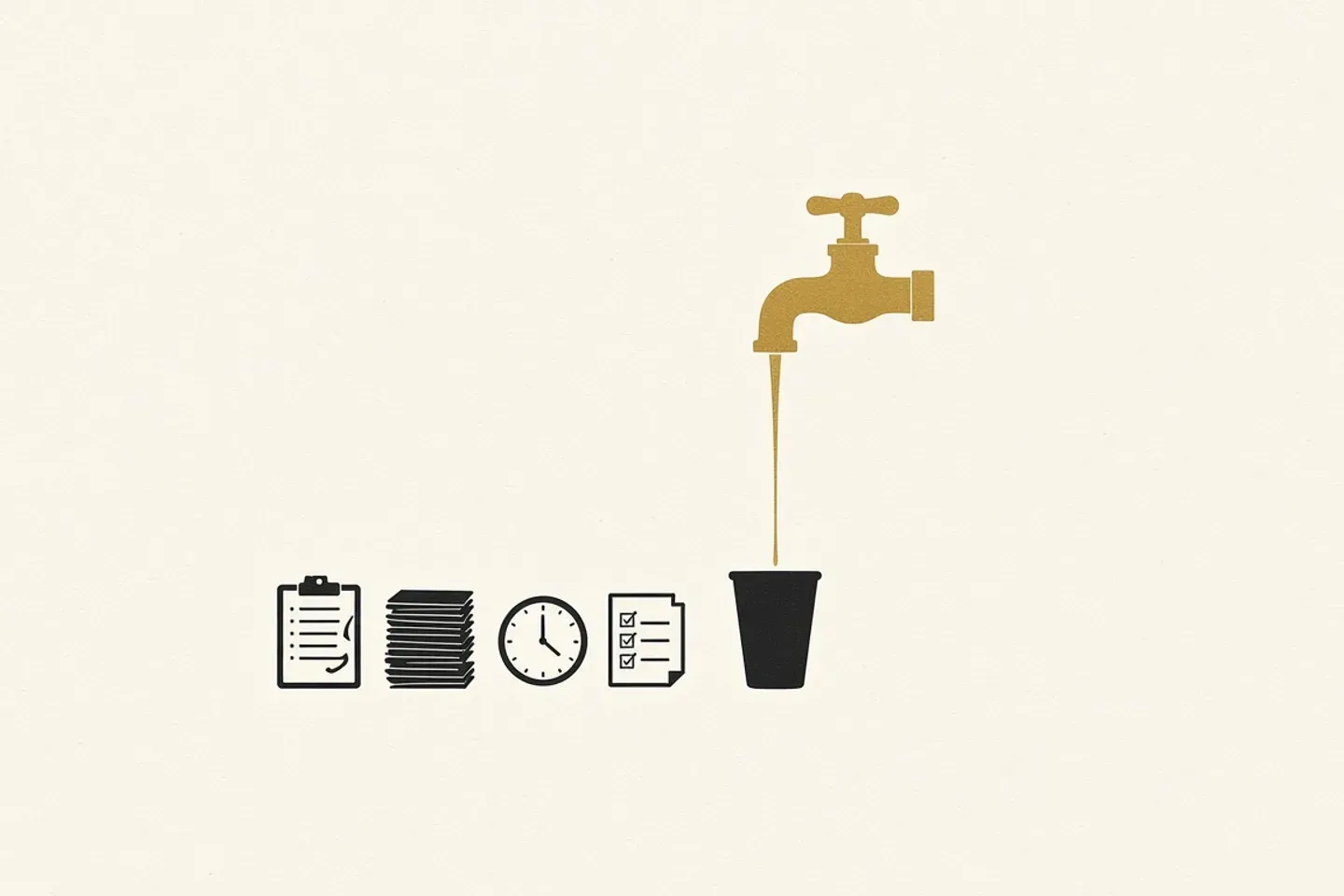
Many companies now expect staff to use AI and then ration how much they can use, and new survey data suggests that the combination pushes AI use out of sight, which is the opposite of what good governance needs.
If you are setting AI budgets or performance goals for 2027, put the two documents side by side before either is signed off, because new survey data suggests that many organisations are asking for more AI use than they are paying for. Workday’s latest AI@Work report, published on 19 November 2026, found that half of the AI users it surveyed had hit usage limits in the past month, and that limits were especially common among heavy users and among people whose performance was tied to AI, formally or informally. It also found that many employees hide their AI use, so a decision made to control cost can quietly become a problem of transparency. I will go through the numbers, then the limits of the data, and then what I think leaders can do about it.
What the survey found
The report, by Workday senior research writer Amanda Wowk, draws on an October 2026 survey of 6,000 workers around the world. Among AI users, 50% said they had hit AI usage limits in the past month. Limits were most common among heavy users, with 75% of those who used AI for almost all of their work hitting them, against 37% of those who used it for only a small part. Support mattered too. Among employees whose employer expects them to use AI, 51% reported insufficient access, training or guidance, and 72% of that group hit usage caps, compared with 55% of those who did have support.
Expectations are now common. Across everyone surveyed, 38% said that using AI was required to be seen as productive or high-performing, with 26% saying it was informally expected and 12% saying it was written into their performance goals. Those expectations went with more rationing, as 64% of people with unwritten AI expectations and 62% of those with formal AI goals reported hitting limits, against 39% of AI users whose employers encourage AI but do not factor it into reviews.
Concealment is the second half of the story. In all, 42% of AI users said they had deliberately concealed their AI use on a work task, and 59% of those had done so more than once. Concealment rose with use and understanding, with 75% of people who used AI for almost all of their work reporting it against 34% of light users. It was also most prevalent among those who had received effective AI training, 66% of whom reported hiding their AI use, against 12% of those who had received no training, on the most natural reading of Workday’s wording, and it was higher among employees facing informal AI expectations (58%) or formal goals (54%) than among those whose evaluations were unaffected by AI use (39%).
The two worlds inside one company
The survey also shows a wide gap between leaders and the people they lead. Of leaders, 70% said AI had improved their daily work, against 43% of individual contributors, and 44% of leaders said AI saved them at least four hours a week, against 15% of individual contributors. Among those who had received training, 57% of leaders rated their employer’s AI training as very or extremely effective, against 22% of individual contributors, and 61% of leaders expected AI to create career opportunities over the next year, against 22% of individual contributors. Workday notes that this is the third consecutive month in which its data has shown benefits that are not shared equally.
A gap like that matters for policy because leaders tend to set the expectations and the budgets. If the people setting AI goals have found AI far more useful than the people asked to meet them, the goals may assume returns that most staff have not yet seen, and the limits may be set without much sense of how quickly real work uses up an allowance.
What the data can and cannot show
The survey is a useful signal, but it has limits. The figures are self-reported, so “hitting a limit” and “concealing use” mean whatever respondents took them to mean, and the article does not set out how the sample was drawn or weighted across countries. The comparisons are associations at one point in time, so they cannot show that tying AI to performance causes people to hit limits or hide their use, since heavier users may simply be more likely both to have AI goals and to run out. Workday also sells workplace software that includes AI, which does not make the data wrong but is worth knowing when reading its recommendations.
The pattern on concealment is the part I would read most carefully. It is surprising that trained, heavy users hide their use most, and the survey does not say why. One possibility is that they do more work where AI could be seen as a shortcut, and another is that they understand their organisation’s rules well enough to know where they are bending them, but these are guesses, and the right response is to ask employees directly.
A contradiction that drives use underground
Taken together, the numbers describe a contradiction. An organisation that ties AI to performance while capping how much people can use is asking staff to deliver more with a tool it is rationing, and the people under the most pressure are the ones most likely to run short. When that happens, people work around the limits, and the survey suggests that a large share of them stop talking about how they use AI at all. Hidden use is the opposite of what governance needs, because a company cannot check the quality, security or fairness of work it cannot see.
Workday’s own recommendations point in sensible directions. It suggests that leaders model open acknowledgement of their own AI use, set clear expectations for disclosure, ask employees what makes them hesitant to share, and recognise responsible AI use alongside strong results. It also recommends practical, role-specific training with protected time to learn and access to the tools people are expected to use, measured by improvements in work quality and not only by course completion.
Five checks before the 2027 plan is signed off
These checks are my suggestions, built on the survey’s findings. First, match every AI expectation to a budget, so that any team with an AI goal has an allowance sized to the work and not to an average. Second, decide whether AI use belongs in performance reviews at all, since employees whose reviews ignore AI reported hitting limits and hiding their use less often, although that is an association and not proof of cause, and consider reviewing the quality of the work instead. Third, train for the role and not for the tool, and check whether individual contributors rate the training as highly as leaders do. Fourth, make disclosure safe by saying publicly how you use AI yourself and by stating which uses are expected, which are welcome and which are not allowed. Fifth, ask your own people whether they have hit limits or hidden their use, because a survey of 6,000 workers elsewhere can tell you what to look for but not what is happening in your own teams.
If this is a conversation your organisation needs to have, share this piece with whoever sets your AI budgets and whoever writes your performance goals, and ask them to read it together. A shared reading is a quick way to check that the budget and the goals describe the same organisation.
David Chadderton is a behavioural strategist and Chief Marketing Officer. He writes The Unoptimised Human.
References
- Wowk, A. (2026) “50% of AI users hit limits at work. Can they still meet performance expectations?”, Workday Perspectives, 19 November. https://www.workday.com/en-us/perspectives/ai/ai-at-work-november.html
Eight minutes. Thirty-three questions.
A precise picture of how you operate: motivations, decision style, and blind spots. Free to start.
- S
- T
- A
- R
The canonical source.
Essays, when there is something worth sending. Choose the subjects you want. I will ask you to confirm the address before I write.