BCG Asked 13,000 Shoppers Why They Won't Buy. Kahneman, Higgins, and Deci Already Knew.
Brand loyalty used to be a default. In 2026 it's a reward re-earned every transaction, and three psychologists predicted it decades ago.

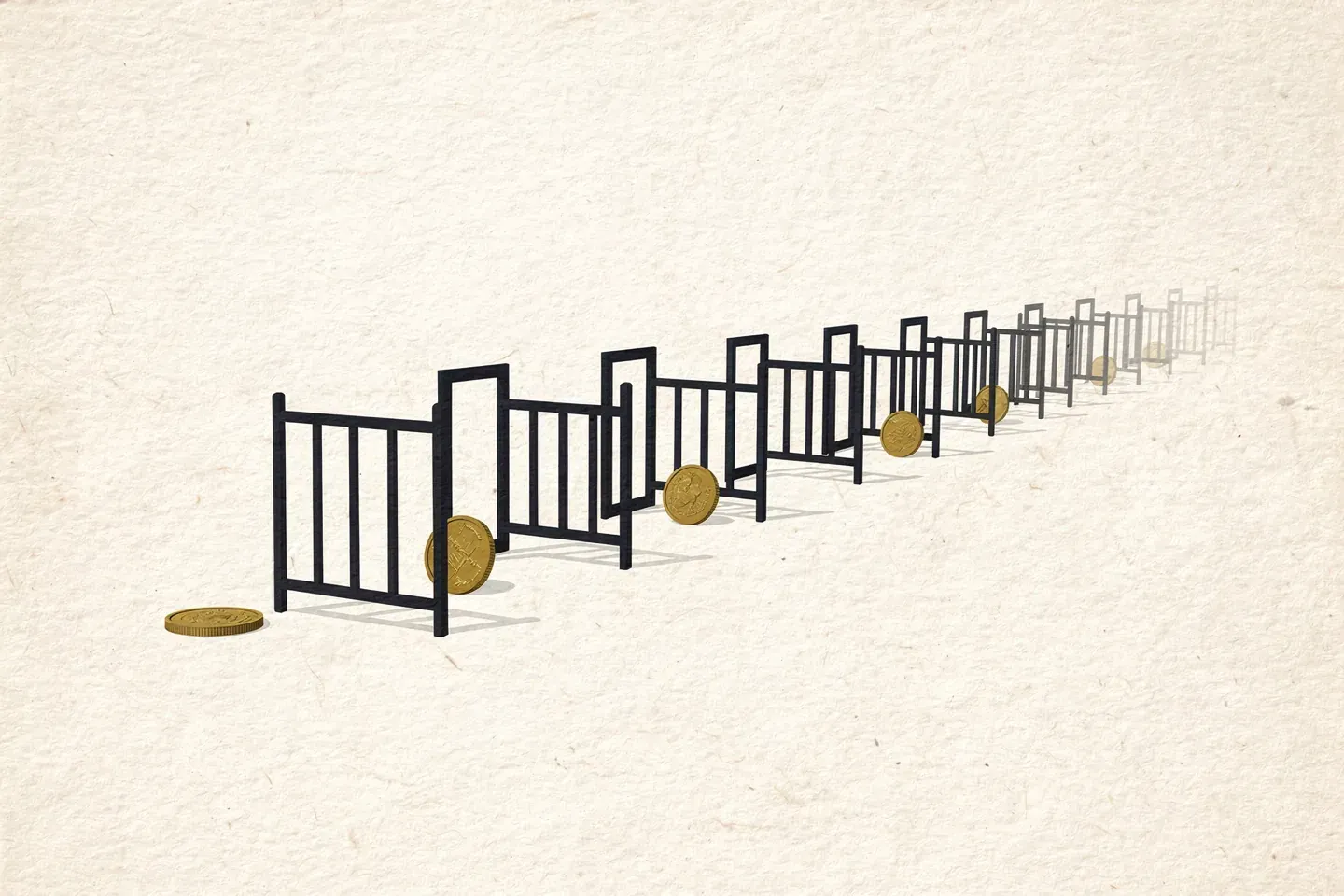
Boston Consulting Group asked more than 13,000 consumers across 12 markets a simple question, and the answer should quietly terrify every brand that still believes loyalty is something they own.
Sixty-seven percent said they would not buy a product, even when they could afford it, if they did not perceive strong value.
Read that again. Not “couldn’t afford it.” Not “didn’t want it.” They could afford it, and they still walked away.
BCG’s own framing is blunt: “Value is the currency. Price is just the entry ticket.” Price, they found, determines whether a product gets considered at all. But it’s perceived value, not affordability, that closes the sale. Across BCG’s research since 2022, perceived value has consistently outranked price as a predictor of purchase. Spending intentions correlate strongly with perceived value, and barely at all with affordability.
And BCG is not alone. Four of the world’s most respected research houses have now converged on the same signal:
-
Capgemini
found 74% of consumers will switch brands for a lower regular price, and 71% will switch if a brand silently shrinks a pack size or cuts quality. Impulse purchasing fell from 71% to 54% in a single year.
-
AlixPartners
describes “frugality reigning” in 2026, a “buy now, wait longer” mindset taking hold across nine countries.
-
Attest
reports 72% of consumers are likely to switch to cheaper brands, and 84% react negatively to shrinkflation.
Here’s the twist that makes this story interesting rather than merely grim: AlixPartners also found that “a clear brand identity I connect to” nearly doubled in importance year over year, from 21% to 43%.
So identity matters more than ever. And loyalty has never been more fragile.
That contradiction is the whole story. And it isn’t new. It’s a mindset that has been hiding in plain sight for decades, one that three psychologists described long before any of these surveys existed.
This isn’t a recession story. It’s a mindset going mainstream.
The easy reading of the 67% is economic: people are skint, so they’re being careful. But the data doesn’t support that. BCG’s finding holds across rich and poor markets alike. Capgemini’s own researchers put it plainly: “Customers have money to spend, but they are more discerning.”
This is not frugality born of poverty. It’s discernment born of competence.
There has always been a certain kind of buyer. Analytical, skeptical, slow to commit. This buyer never bought a brand on faith. They read the reviews. They compared the specs. They calculated the price-per-unit. They treated a brand’s claims as a hypothesis to be tested, not a promise to be trusted.
For most of marketing history, that buyer was the exception. The majority bought on habit, on aspiration, on the warm glow of a familiar logo. Brands could count on a baseline of default loyalty: I’ve always bought this, so I’ll buy it again.
What the 67% tells us is that the analytical buyer is no longer the exception. They are the mainstream. Three forces accelerated the shift:
-
Economic pressure
forced everyone to evaluate rather than assume. When money is tight, even the habit-buyer starts doing the maths.
-
Information abundance
made comparison effortless. The analytical buyer’s tools (reviews, specs, side-by-side tables) are now in everyone’s pocket.
-
Eroded trust
trained consumers to verify. Shrinkflation, surprise fees, and silent quality cuts taught a generation that a brand’s word is not evidence.
The result: the behaviour that once defined a minority of careful shoppers has become the default posture of the entire market.
Why they refuse: the psychology of the 67%
Three bodies of research explain why this shift happened, and why it’s structural rather than cyclical. Each one is named after the people who built it.
Deci and Ryan: the autonomy refusal
Edward Deci and Richard Ryan’s Self-Determination Theory rests on three psychological needs: autonomy, competence, and relatedness. We are motivated when we feel we are acting by choice, when we feel capable, and when we feel connected to others.
The 67% shopper is exercising all three, against the brand.
Autonomy is the most obvious. Refusing to buy unless value is proven is a declaration of independence: I will not be told what to buy. I will decide, on my own terms, whether this is worth it. The purchase must feel self-chosen, not brand-imposed.
Competence is what makes the refusal possible. Consumers have learned to evaluate: reviews, specifications, unit pricing, return policies. They can judge value now, and because they can, they demand to. A consumer who knows how to compare will not accept an assertion where a comparison is available.
Relatedness has migrated. Trust no longer flows from brand to consumer; it flows between consumers. People trust experts, friends, and increasingly AI tools more than they trust the brand’s own advertising. BCG found that more than half of consumers don’t fully trust any single source of information, so they concentrate their trust in fewer, independent voices. The brand’s claim is the last thing they believe.
Deci and Ryan never studied brand loyalty. But they described exactly the person who walks away from a purchase they can afford, because buying it would mean surrendering their autonomy to someone else’s assertion.
Kahneman and Tversky: the end of the shortcut
Daniel Kahneman and Amos Tversky gave us the two systems of thinking: System 1, fast and automatic, and System 2, slow and deliberate.
Brand loyalty was a System 1 shortcut. I always buy this brand, so I’ll buy it again. A heuristic that conserved mental energy by skipping evaluation entirely. For decades, that shortcut was a brand’s most valuable asset. It meant you didn’t have to win the argument every time; you just had to not lose the habit.
The 67% is System 2 taking over. Deliberate evaluation is replacing automatic habit. The consumer is no longer outsourcing the decision to familiarity; they’re running the analysis themselves, every time.
And Kahneman and Tversky’s most famous finding, loss aversion, explains why the default has flipped. Losses loom roughly twice as large as gains. The pain of a bad purchase (wasted money, buyer’s remorse, the slow burn of realising you overpaid) is felt far more intensely than the pleasure of a good one.
So the rational default shifts. When the downside of buying wrong outweighs the upside of buying right, the safe move is not to buy, unless the value is demonstrated clearly enough to overcome the fear of loss. The 67% isn’t a refusal to spend. It’s a refusal to risk.
Higgins: the prevention flip
E. Tory Higgins’s Regulatory Focus Theory describes two ways people pursue goals: a promotion focus, chasing gains, ideals, and aspirations, and a prevention focus, avoiding losses, being careful, and fulfilling duties.
For decades, brand marketing spoke almost exclusively in promotion language. Become who you want to be. Aspire. Indulge. You deserve it. Advertising sold identity, the person you’d become by buying the thing.
The 67% is prevention-focus behaviour. “I won’t buy unless value is proven” is not a statement of aspiration; it’s a gate against loss. It’s the cautious, duty-bound voice that asks “is this a mistake?” before it asks “is this a pleasure?”
Higgins’s insight is that these two orientations aren’t just moods. They’re stable ways of approaching the world, and they can be situationally triggered. A decade of shrinkflation, hidden fees, and broken promises has pushed an entire market from promotion to prevention. Consumers didn’t stop wanting nice things. They stopped trusting the promise of nice things, and started demanding the proof.
Four ways people decide, and which one is winning
Not everyone decides the same way. Consumer psychology has long recognised distinct decision-making styles, and they map neatly onto the shift we’re seeing.
- The social buyer is driven by connection and belonging. They follow the crowd and switch when the community moves. They need social proof, community, and peer validation.
- The analytical buyer is driven by logic, evidence, and clarity. This is the 67% itself. They demand proof before buying. They need data, specs, transparency, and expert validation.
- The thrill-seeker is driven by novelty and excitement. They still buy on impulse, but the novelty has to be worth it. They need boldness backed by demonstrable value.
- The pragmatist is driven by practicality and reliability. They buy on function and are ruthless about value. They need durability, simplicity, and no gimmicks.
For most of the last century, brands built their playbooks around the social buyer and the thrill-seeker: sell identity, aspiration, and FOMO. Make people feel something, and the sale follows.
What the 67% tells us is that the analytical buyer’s playbook, selling evidence, proof, and value, has become the market’s default. The winning brands of 2026 have stopped selling identity and started selling evidence. They still reward identity once it’s earned; they just no longer assume it’s owed.
What winning looks like now
If the analytical mindset is now the mainstream, the path to purchase changes. The old funnel (capture attention, create desire, close) assumes a consumer who can be moved emotionally. The new consumer moves through four stages instead:
- Earn their attention with substance. The analytical buyer is not captured by spectacle; they’re captured by credibility. Data, expert analysis, and transparent pricing are the new hooks.
- Give them proof at the moment of decision. This is where most brands lose. They ask for trust when they should be offering evidence: comparisons, specifications, independent reviews, guarantees. Remove ambiguity and the fear of loss recedes.
- Keep validating after the sale. Loyalty is now conditional. The analytical buyer stays only as long as the product’s performance keeps confirming the decision. Deliver updates, education, and consistency, or watch them quietly leave.
- Give them something worth recommending. The analytical buyer doesn’t share because they’re excited; they share because they’re convinced, and they want to help others make a smart decision. Give them evidence worth passing on.
The tactical implications are concrete and uncomfortable for many brands. Publish your prices. Never shrink a pack silently. Make every claim verifiable. Lead with reviews, not slogans. And, critically in 2026, structure your product information so that the AI tools consumers now use to compare can actually find and understand it. When the comparison is delegated to an algorithm, the brand that provides the clearest evidence wins by default.
Loyalty is a reward, not a default
The 67% is not a crisis. It’s clarity.
For the first time, consumers have told brands, at scale and in their own behaviour, exactly what they want. Not more aspiration. Not a stronger identity to buy into. They want evidence. They want to feel autonomous in the choice, competent in the evaluation, and safe from the loss of buying wrong.
Deci and Ryan explained the motivation. Kahneman and Tversky explained the processing. Higgins explained the direction. Three psychologists, decades ago, described the exact behaviour that BCG, Capgemini, AlixPartners, and Attest have now measured across thousands of consumers and dozens of markets.
The brands that win in 2026 will be the ones that stop asking “how do we make them loyal?” and start asking a harder, better question:
“What evidence do we owe them?”
___
David Chadderton is STAR Dynamics and author of The STAR Framework: Rewriting the Rules of Consumer Engagement (NYC Big Book Award, 2025), The STAR Operating System, and Dear Algorithm, It’s Not Me, It’s You.
Eight minutes. Thirty-three questions.
A precise picture of how you operate: motivations, decision style, and blind spots. Free to start.
- S
- T
- A
- R
The canonical source.
Essays, when there is something worth sending. Choose the subjects you want. I will ask you to confirm the address before I write.