The Mind as a Cockpit
A wartime Cambridge simulator built from a Spitfire cockpit shows why a simple model that keeps the right relationships can teach more than a complete one.

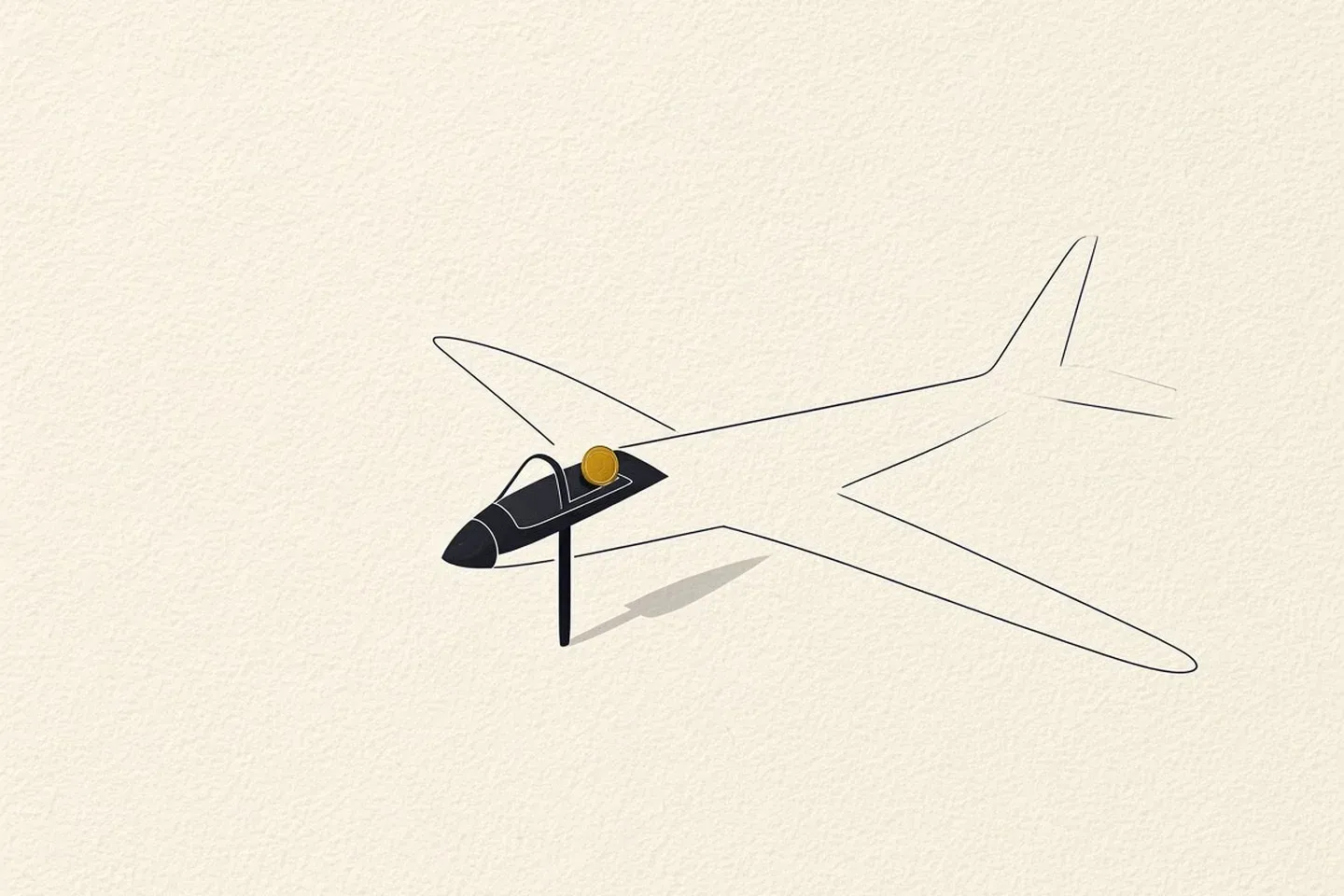
A wartime simulator built from a Spitfire cockpit suggests that a small model which keeps the right relationships can teach more than a complete one.
At the beginning of World War Two, two Cambridge psychologists turned a damaged Spitfire cockpit into a flight simulator, and what it showed them about tired pilots challenged a widespread assumption about fatigue. David Bloor tells the story in his book The Cambridge Cockpit and the Paradoxes of Fatigue, 1940-1977, which he discusses with Geoff Bunn in the December 2026 issue of The Psychologist. I want to walk through what the cockpit was, what it found, and why its lesson about models reaches well beyond aviation.
A Spitfire on a laboratory bench
Bloor explains that at the beginning of the war the Flying Personnel Research Committee charged Frederic Bartlett and Kenneth Craik with the task of studying pilot fatigue. They re-purposed a Spitfire cockpit as what Bloor calls “a primitive but highly ingenious flight simulator” and tested trainee pilots of the Royal Air Force. Bartlett was responsible for the basic design of the experiment, and Craik supplied the engineering and constructive skills needed to measure the details of each pilot’s responses.
Craik refitted the cockpit with an airspeed indicator, artificial horizon, altimeter, vertical-speed indicator, directional gyro, and turn-and-bank indicator, so that it looked like a real cockpit to the person sitting inside it. The hard part was making those instruments behave realistically, because an aircraft keeps changing direction, height, speed, or angle for as long as a pilot holds a control in position. Craik solved this with Kelvin integrating discs, a 19th-century mechanical calculating device, which let the instruments respond not only to how far a control was moved but to how long it was held there. A system of discs, wheels, cords, pulleys, cams, gears, springs, and recording pens did the rest. When a pilot flew a required manoeuvre correctly, the recording trace ran in a straight line, and mistakes produced deviations that the team could measure. In Bloor’s words, the cockpit “turned flying-like behaviour into quantifiable data”, and it “reportedly cost only £12 to build”.
What the tired pilots did
The experimental tasks revealed what Bloor describes as “the alarming frequency of fatigue-like mistakes made by the pilots”. The results also challenged the common assumption that fatigue simply means a reduced capacity to work, because, as Bloor puts it, Bartlett and Craik “reported that fatigued pilots often did more rather than less work”. Bloor explains that psychologists who studied fatigue frequently found their results “deeply perplexing” and described the situation as “paradoxical”, which is where the book’s subtitle comes from. He notes that a quick and reliable fatigue test proved elusive, that performance sometimes got better rather than worse as a task became more demanding, and that many psychologists dismissed the term “fatigue” as unscientific.
The laboratory then ran into the field. A study of landing-accident statistics by Bomber Command “indicated that pilot fatigue was operationally negligible”, and Bloor sums up the result plainly: “Laboratory work and field studies were in conflict.” Even so, the cockpit work shifted the study of fatigue from simple repetitive movement to complex skills, and from peripheral to central nervous processes. Yet Bloor reports that recent literature on pilot fatigue suggests that, “after some eight decades, this Cambridge result has been forgotten”. Measuring equipment has improved enormously since the 1940s, he says, while “old, pre-Bartlett and pre-Craik assumptions are re-asserting themselves”.
Why a small model can teach more than a complete one
The magazine runs a panel alongside the interview about Craik as a maker of miniature machines, including working models of medieval siege engines and steam engines, long before he argued that the mind works by constructing “small-scale models” of reality. The panel makes a point that I find useful well outside the history of science. To build a functioning miniature, it says, the maker “must decide what matters, what can be omitted, which structural relationships must be preserved”. It then describes the cockpit as “itself a model, reducing the enormously complicated environment of flying an aircraft to a controlled and manipulable system” in which researchers could study the relationships between human action, machine response, fatigue, and performance.
This is where the story offers something useful today. The cockpit never left the ground, and nobody would have mistaken it for a real flight. It worked because it kept the relationship that mattered most, between what a pilot did with the controls over time and what the instruments showed back, and because it made every departure from the intended path visible on paper. The panel describes Craik’s view of the mind in the same terms, as an internal model that “simplifies reality, preserves important relationships, allows transformations to be rehearsed and enables future events to be anticipated”. My own gloss is that a mind which tried to copy the whole world would be no more useful than a map drawn at full scale.
The clash between the laboratory and Bomber Command’s statistics also carries a lesson about models. The two sources measured different things in different ways and came to different conclusions, and the interview does not say which was right. What it does show is that the disagreement was productive, because Bloor says the struggle to resolve it informed much post-war Cambridge psychology. A simple model earns its keep when it is set against other evidence, not when it is treated as the final word.
Theories in a working relation
The part of the interview that stays with me most is about silos. Bunn suggests that Bartlett would have decried the division of psychology into independent sub-specialities, and Bloor agrees: “I think that Bartlett would have found it highly undesirable for special fields in psychology to develop into distinct ‘silos’. He was opposed to ‘systems’ and ‘schools’ of thought in psychology.” Bloor accepts that this does not rule out a division of labour between laboratories, but he goes further, arguing that “almost certainly, if his own imagination had been divided into separate areas, with strong boundaries between them, he would not have thought up the idea of the Cockpit experiments.”
Bloor applies the same thinking to his student reading. He notes that one could call Bartlett’s Remembering “anti-reductionist” and Broadbent’s Perception and Communication “reductionist”, yet he never saw them as opposed: “When their arguments are put in context, they are perfectly consistent and mutually supportive.” The cockpit itself drew on several sources at once. Bloor explains that Bartlett and Craik took their theoretical stance from the neurologist John Hughlings Jackson, and that Bartlett reworked Jackson’s ideas to fit a Darwinian framework. When Bartlett used Jackson to interpret the cockpit findings, he could see fatigue as a failure of upper levels to control lower levels of function. Bloor contrasts this with the view held by most psychologists of the time, who “saw fatigue as an increase in inhibition rather than as a process involving disinhibition”.
One more idea from the interview belongs here. Bloor draws a methodological lesson from Bartlett, which is that the causal mechanisms underlying successful recall were the same as those that produced failures of recall, and that Broadbent later made the same point about perception: the mechanisms that sometimes make us see things that are not there are the same ones that, under different circumstances, make us see what is there. Bloor says this might be called a principle of “symmetry”. I find it a helpful reminder that what we call a bias may often be the same machinery that serves us well most of the time, working under different conditions.
What this means for the STAR Framework
This is the thinking behind the STAR Framework, which I built to bring several theories into one layered, probabilistic picture of how people make decisions. Self-Determination Theory is the first foundation layer. The framework then extends it with a need for security, OCEAN facets, System 1 and System 2 thinking, promotion and prevention focus, social identity, and the biases that shape everyday choices. No single layer explains a decision on its own, and the value comes from holding them in a working relation, much as Bloor describes the standpoints of Bartlett’s Remembering and Broadbent’s Perception and Communication being “put in a working relation to one another”.
The four lenses are deliberately simple models in Craik’s sense, and each draws on several layers at once rather than mirroring any single need. A Realist reading may foreground security, stability and reliability, along with simplicity and ease, and an Adventurer reading may foreground autonomy, exploration and freedom to act. A Thinker reading may foreground competence, understanding and considered analysis, and a Socialiser reading may foreground connection, inclusion and relationships. Each of us uses all four in different amounts, so they describe tendencies and probabilities rather than fixed boxes, and they leave out a great deal on purpose. Like the cockpit, they are useful only if they keep the relationships that matter, and only if we keep checking them against what people actually do.
The cockpit’s own history adds a caution. The fatigue findings describe trainee pilots in a wartime simulator, and they are not a way to sort anyone by how they behave under pressure. Bloor reports that recent literature suggests the Cambridge result has been forgotten, and the risk with any model is that we either forget what it taught us or start treating it as the whole of the world.
If you would like to see how your own decisions draw on these layers, take the free STAR Cognitive Profile Assessment (33 questions) at starassess.com. It gives you a simple model of your decision-making style, built to be held lightly and tested against your own experience.
David Chadderton is a behavioural strategist, Chief Marketing Officer and creator of the STAR Framework. He writes The Unoptimised Human.
References
- Bloor, D. (2025) The Cambridge Cockpit and the Paradoxes of Fatigue, 1940-1977. Chicago: University of Chicago Press. ISBN 978-0-226-84232-5.
- Bunn, G. (2026) “‘They turned the cockpit of a de-commissioned Spitfire into a flight simulator and tested RAF pilots’”, interview with David Bloor, The Psychologist, December 2026, Looking back. Available at: https://www.bps.org.uk/psychologist/they-turned-cockpit-de-commissioned-spitfire-flight-simulator-and-tested-raf-pilots
Eight minutes. Thirty-three questions.
A precise picture of how you operate: motivations, decision style, and blind spots. Free to start.
- S
- T
- A
- R
The canonical source.
Essays, when there is something worth sending. Choose the subjects you want. I will ask you to confirm the address before I write.